Planning a new deck in Rotorua: consent, timber and what to ask
By Sofia Moreau, Editorial Director · Updated 2026-11-06
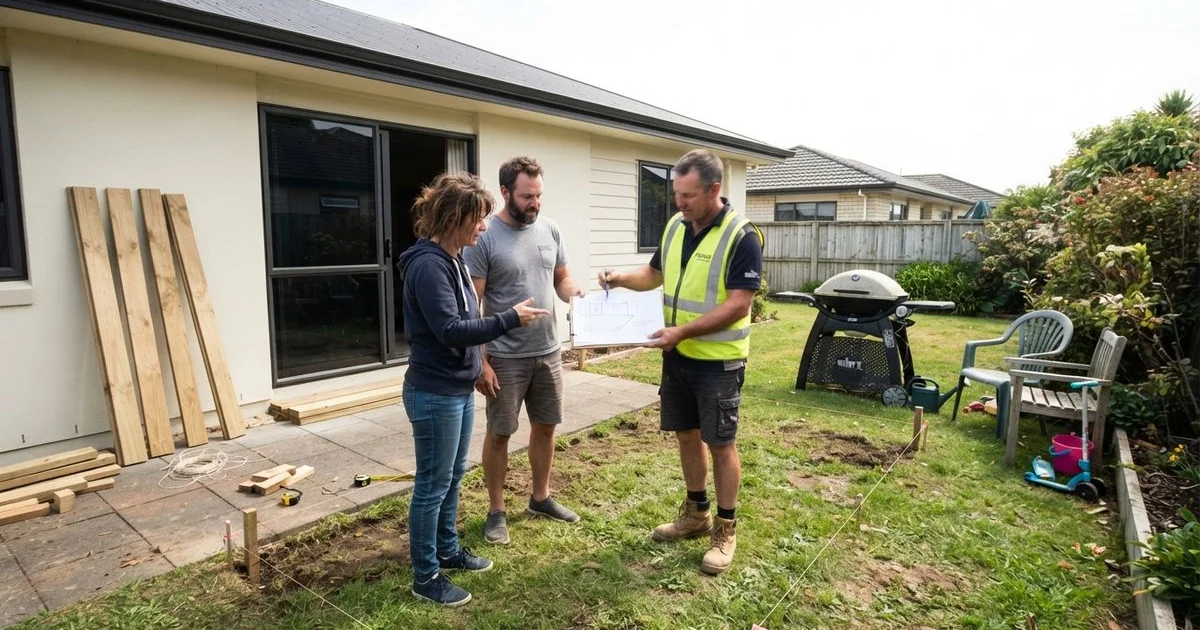
A deck is one of the simpler building jobs, which is why people skip the planning. The mistakes that cost money later are almost always decided before the first post goes in. This is general information, not legal or engineering advice.
Consent first
Height is the main trigger. Decks close to the ground are often exempt under Schedule 1 of the Building Act, with conditions. Higher decks, where a fall is a real risk, commonly need consent, and so do those attached in ways that affect the house. Do not guess: ask the council with a sketch showing height, area and how the deck connects.
Structure
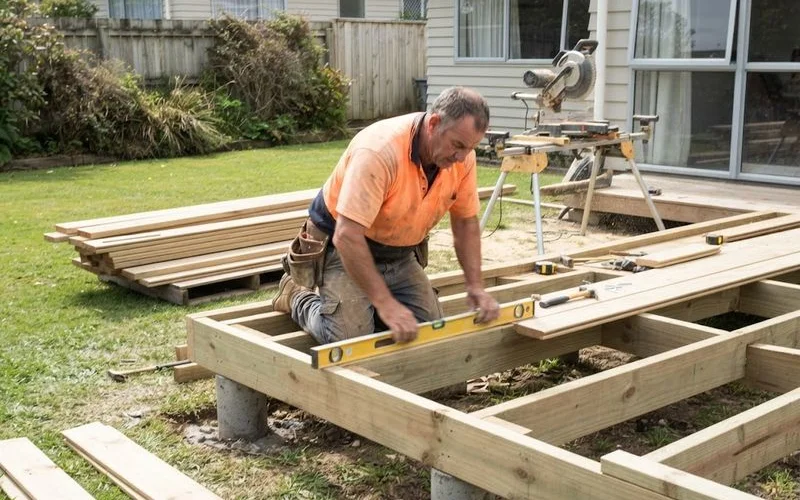
A deck is built from piles, bearers, joists and decking boards. The piles carry the load into the ground, bearers span between piles, joists span between bearers, and boards sit on top. Spacing and sizes depend on span and load, which is why a builder works from standards rather than eyeballing it.
| Part | Job | What to ask |
|---|---|---|
| Piles | Carry load to the ground | Depth, ground conditions |
| Bearers | Main beams over the piles | Size and timber grade |
| Joists | Support the boards | Spacing |
| Boards | Walking surface | Species, gaps, fixings |
| Balustrade | Fall protection | Height and compliance |
Timber and weather
Treated timber comes in hazard classes, stamped on each piece. Ground-contact and outdoor structural timber needs a higher class than dry interior framing. Using the wrong class is a false economy because decay shows up years later. Ask what class is proposed for each part and which fixings go with it, since weak fasteners rot out before the timber does.
Where it meets the house
The join between deck and house wall is the weak point for moisture. Flashing and a gap for drainage matter more than the boards. If your house has a cavity cladding system, make sure the builder understands how to attach without bridging it.
Repair or replace
If you already have a deck, the choice between fixing it and rebuilding depends on whether the structure under the boards is sound. Boards are cheap to swap. Rotten bearers or piles are not. Get the frame assessed first.
Finding a builder
Look for someone who asks about consent, timber class and drainage without being prompted. You can browse carpentry and deck builders in the directory, learn how scores are built on the methodology page, or go back to the home page.
Quote checklist
Check that the quote names timber class, fixings, balustrade, consent responsibility, and removal of old materials.
Safety and finish
Balustrades are required where a fall is a risk, and their height and gap sizes are set by the Building Code. Do not leave them for later. Stairs, lighting and non-slip surfaces matter more than most people expect, especially on a deck that gets wet or shaded. Leave a gap between boards for drainage and expansion, and keep leaves and dirt from sitting in it.
Maintenance
Most decks need regular cleaning and periodic oiling or sealing, depending on the timber. Ask your builder for a maintenance schedule and what voids any guarantee. A deck that is looked after lasts noticeably longer than one that is ignored.
FAQ
- Does a deck need building consent?
- Low decks close to the ground are often exempt, while higher decks commonly need consent because of fall risk. Confirm with the council for your design.
- What timber should I use?
- Use timber treated to the hazard class that suits its exposure. The class is stamped on the timber, and structural parts outside need a higher class than interior framing.
- How long should a deck last?
- It depends on timber, exposure, drainage and maintenance. Ask your builder what to expect for the materials they propose.
- Do I need a licensed builder for a deck?
- Decks are generally not restricted building work, but if the deck attaches to the house or affects weathertightness, ask about licence requirements.