Checking a builder before you sign: licence, contract and red flags
By Sofia Moreau, Editorial Director · Updated 2026-10-23
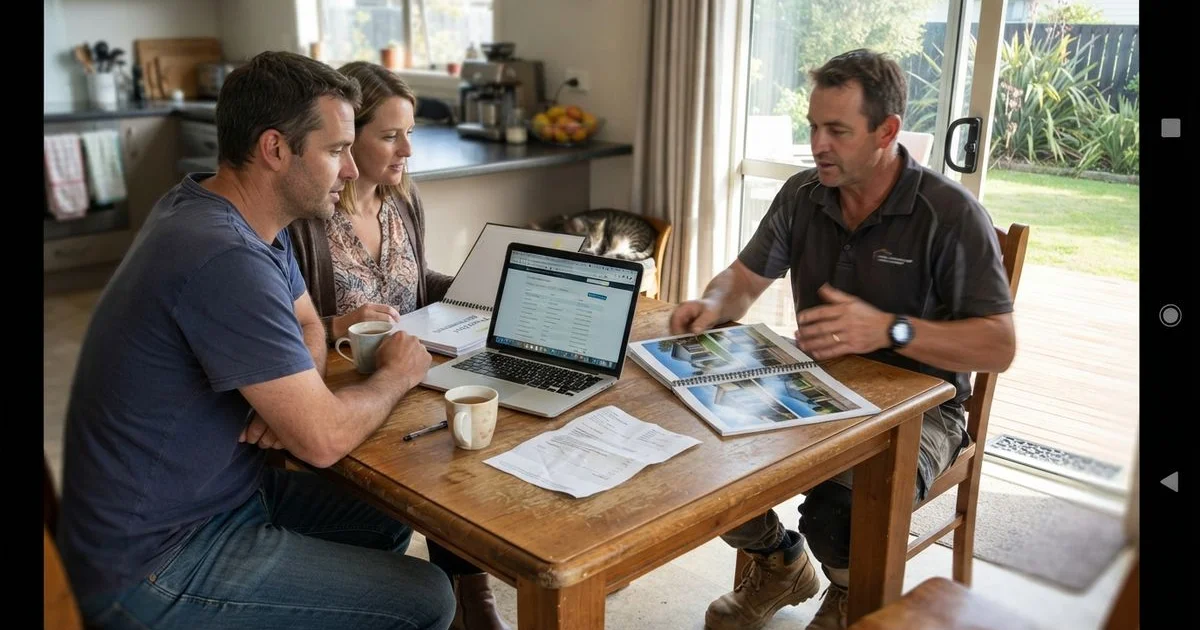
Choosing a builder is mostly a risk decision. The checks below take an evening and remove most of the avoidable risk. This is general information, not legal advice.
Check the licence
Restricted building work, which covers structure, weathertightness and fire safety on homes, must be done or supervised by a licensed building practitioner. Ask for the name and licence class of the person responsible and look them up on the public register. The licence class should match the work: a carpenter licence and a site licence are not interchangeable.
Get it in writing
A written contract should set out the scope, price, payment stages, start and finish dates, how variations are handled, and who obtains consent. If the contract says one thing and the conversation said another, the contract wins, so make it match the conversation.
| Check | What good looks like |
|---|---|
| Scope | Itemised, with exclusions stated |
| Price | Fixed, or clear on provisional sums |
| Payments | Tied to stages of work, not dates |
| Variations | Written and signed before work proceeds |
| Consent | Named person responsible |
| Dispute process | Stated, even if brief |

Red flags
- Reluctance to provide a licence number or the supervisor’s name
- A quote that is a single line with no breakdown
- Pressure to sign today or pay a large deposit
- Cash-only or “no paperwork” offers
- Advice to skip consent to save time
- Poor communication before the job starts
One flag is a question. Several together are a reason to look elsewhere.
Read reviews properly
Reviews are useful when you read patterns, not single stars. In this directory, the recurring praise is for communication, quality workmanship and finishing on time. Where complaints appear they tend to be about delays or poor follow-up. The directory’s scoring weighs rating, review volume, recency and sentiment, and the methodology page explains the weights.
Ask for references
Ask for a recent past client in a similar job and a chance to see finished work. A builder confident in their work will arrange it. You can start your search from the home page.
Before the first payment
Confirm the licence, read the contract fully, make sure insurance and consent responsibilities are stated, and keep copies of everything. If you are unsure about a clause, get independent advice before signing.
Insurance and warranties
Ask what insurance the builder holds and whether it covers your type of job. For new homes and larger work, ask about warranties and what paperwork you will receive at handover. Implied warranties under New Zealand building law apply to residential work, but you should read what your contract says about defects and how they are reported. Keep copies of plans, certificates, producer statements and warranty documents together after the job.
When something goes wrong
Put concerns in writing early, with dates and photos. A calm written record helps if you need to involve the council, a lawyer or a dispute service. Most issues are sorted by a straight conversation, and builders with good communication usually respond fast.
FAQ
- Do I need a written contract?
- For residential work above the legal threshold, a written contract is required in New Zealand. For smaller jobs it is still the sensible thing to have. Ask the council or a lawyer about the current rules.
- How do I check a builder is licensed?
- The licensed building practitioner register is public. Look up the name and licence class of whoever will carry out or supervise the work.
- Is a large deposit normal?
- Payment should follow stages of work. A large upfront payment is a reason to ask questions.
- What if a builder will not put things in writing?
- Treat it as a warning sign. Scope, price and variations should all be recorded.