The new home build process in Rotorua, step by step
By Sofia Moreau, Editorial Director · Updated 2026-10-28
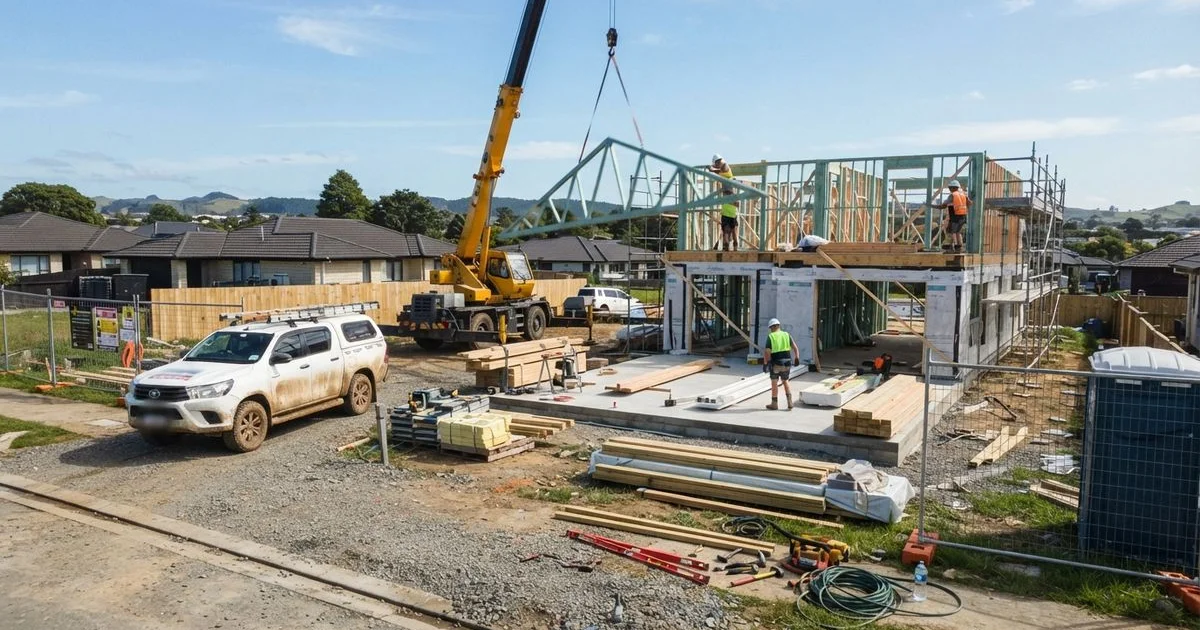
Knowing the sequence helps you spot where decisions are due and where delays tend to appear. This is the order most new builds follow.
The stages
| Stage | What happens | Typical delay risk |
|---|---|---|
| Design and site assessment | Plans, survey, soil advice | Late design changes |
| Consent | Council reviews plans | Missing information |
| Site works and foundations | Earthworks, piles or slab | Ground conditions, weather |
| Framing | Floor, walls and roof structure | Timber supply |
| Roof and cladding to lock-up | House made weathertight | Weather, product lead times |
| Services and lining | Wiring, plumbing, insulation, plasterboard | Trade scheduling |
| Fit-out and finishes | Kitchen, bathroom, flooring, paint | Selections not made |
| Final inspection and sign-off | Council checks, code compliance certificate | Outstanding items |
Design and consent
Early decisions cost least to change. Settle floor plan, orientation and finish level before consent plans are drawn. Once consent is granted, changes may need an amendment. Your builder or designer typically handles the application, but confirm it in writing.
Ground and foundations
In Rotorua the ground can be pumice or geothermally active in places. A geotechnical report may be needed, and it can change the foundation type and the price. Better to find out before you commit to a design than after.
Framing to lock-up
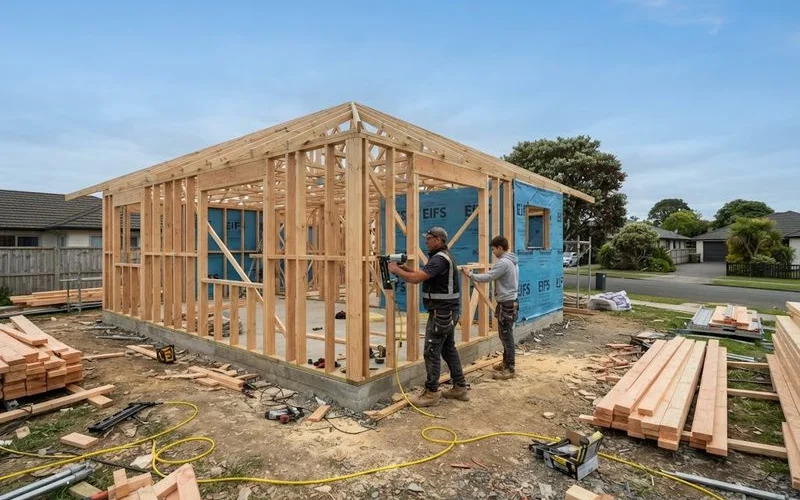
Framing goes up quickly and looks like fast progress. The slower part is making it weathertight: roof, wall wrap, cavity battens, cladding, windows and flashings. Weathertightness matters because moisture problems cost far more to fix later, so do not hurry this stage.
Fit-out
Selections are the usual pinch point. If tiles, benchtops and fittings are not chosen in time, trades wait. Keep a selections schedule with dates from your builder.
Sign-off
The council inspects at stages and, when satisfied, issues the code compliance certificate. Do not make final payment until outstanding items are fixed and sign-off is in hand. Keep the certificate, the producer statements and any warranty paperwork together.
Staying in control
Ask for a written programme, a fortnightly update and a single contact. Reviewers across the directory often credit builders with clear communication through the build, and it is worth asking how they run it. Browse new home builders, read how scores work on the methodology page, or start from the home page.
Payments along the way
Progress payments are normally tied to stages: foundations, frame, lock-up, lining and completion. Check that each payment matches work actually done on site. Pay on stage completion, not on the calendar, and keep your own record of what has been done. If a stage is behind, ask why before paying for the next.
Visits that help
Visit the site at agreed times rather than dropping in unannounced, which can be unsafe. Take photos at framing and before lining goes up, because you will not see inside the walls again. Ask your builder to point out where insulation, wiring and plumbing sit while they are still visible.
FAQ
- How long does a new build take?
- It depends on size, design, weather and consent timing. Ask builders for a stage-by-stage programme rather than one headline number.
- What is lock-up?
- The stage when the house is weathertight with roof, cladding, windows and exterior doors fitted, so interior work can proceed regardless of weather.
- What delays a build most often?
- Consent processing, ground conditions, material supply and late design changes are common causes.